Things are slowing down a bit in terms of gardening, and we started making plans for what we would like to do next year. Gardening is the definition of slow-living, you can plant things but you have to wait for them to grow. Last year we planted some small trees and shrubs from Hardy Fruit Tree Nursery that were around 1-3 feet including a basket willow. I was unsure about how successful they would be as they looked like sticks when we planted them. However, a year later that same basket willow has surpassed me in height, and is inching towards six feet. We also planted wild strawberries last year that didn’t look like they were doing very well, but they amazingly not only survived the winter, but graced us with berries for the first couple of weeks in June (in my excitement I forgot to take a proper photo!)
Last week, a couple in the village welcomed us into their house on a day of particularly loud construction. They have a lovely garden that spreads over a couple of acres. The wife asked me if I would like some plants from her garden as they had begun to overcrowd one another. It was difficult to tell where one plant ended and another begun. From that I learned the importance of considering spacing when planting flowers and other perennials. While areas of our garden appear quite sparse right now, in a few years I imagine the plants will continue to fill out and spread. Even in the past year, I’m amazed to see that bee balm and daisies that I planted have spread by at least half a foot! In that sense, while it is desirable to try to finish our garden as fast as we can, even within a year like Monty Don’s ‘Big Dreams Small Spaces’, I’m learning that it’s a process that will develop over the years. We have decided to think more long term when it comes to our garden, thinking about what we want over the next few years, rather than only thinking about ‘now’.
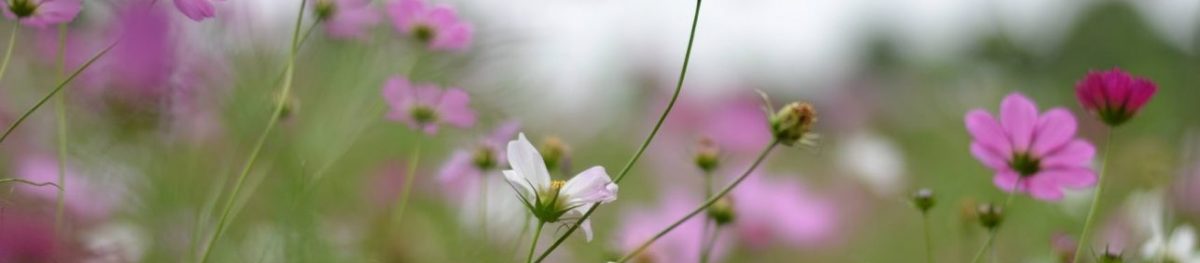
There are areas of our garden this year that we have decided to leave for now, mainly focusing on annuals like cosmos. With a baby, our time is really quite limited and while the space we have is modest compared to a lot of other folks in the country, it’s a bit overwhelming for us. There are other areas that are currently covered with wild carrot and nettles that we plan to cover with cardboard in the autumn. In many of those areas we planted things that were given to us, that appear dead or dying now – but will likely begin to thrive next year. We hope to work on that garden more in the future. It’s nice to have something to look forward to! It’s also good to avoid putting too much pressure on ourselves by thinking in years rather than days or months. I’m amazed by the progress we have made in our year and a half here, and am excited to see how the garden will change in the coming years.
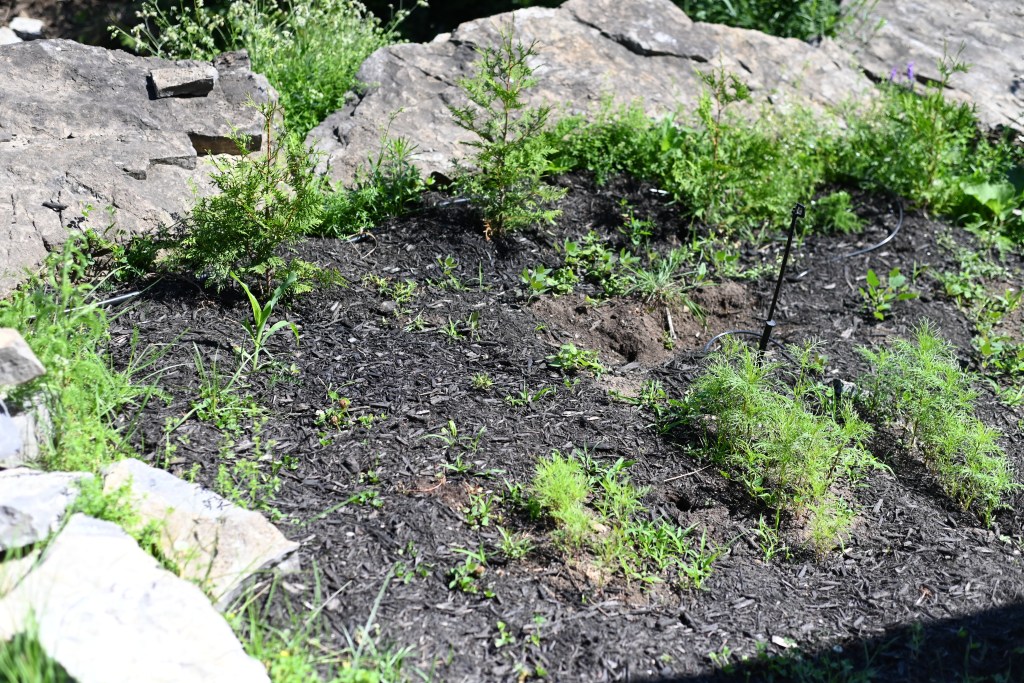
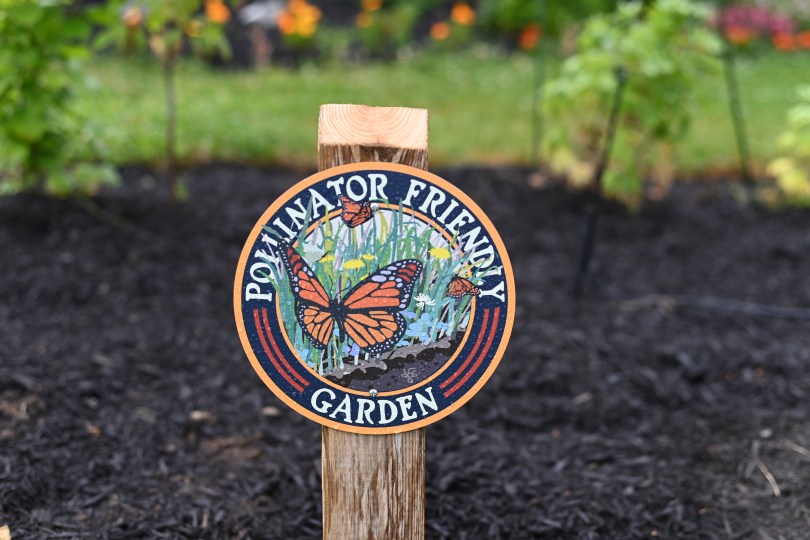
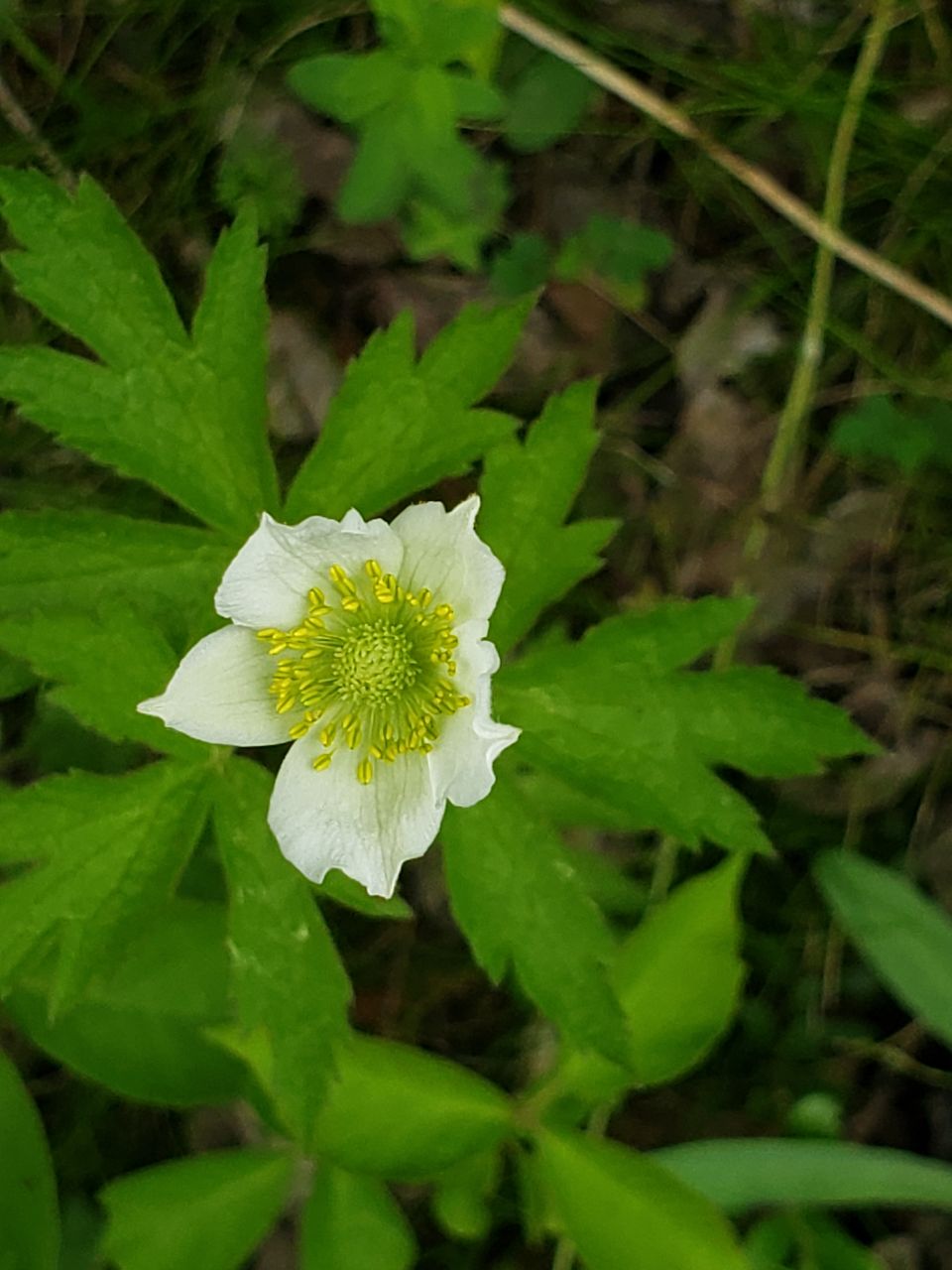
One change we made in the past few weeks was dig out space for a new garden that will focus on pollinator attracting natives. We ordered some plants from Ontario Native Plants that we look forward to getting including foxglove, echinacea, and Canada anemone. In the meantime we transplanted some delphinium from the back of our house and also planted some phlox moss and wild geranium that we were gifted. It looks pretty sparse right now, and I’m sure that some folks might think us odd for having a lot of clover, and gradually removing our lawn. We put up a sign in the new garden declaring it as pollinator friendly. I’m not sure if anyone will notice our sign, but it would be interesting if some folks begin to look into what that means and decide to make their own pollinator friendly gardens. I’m also considering adding little nameplates beside each of our plants so that folks can learn more about native plants.
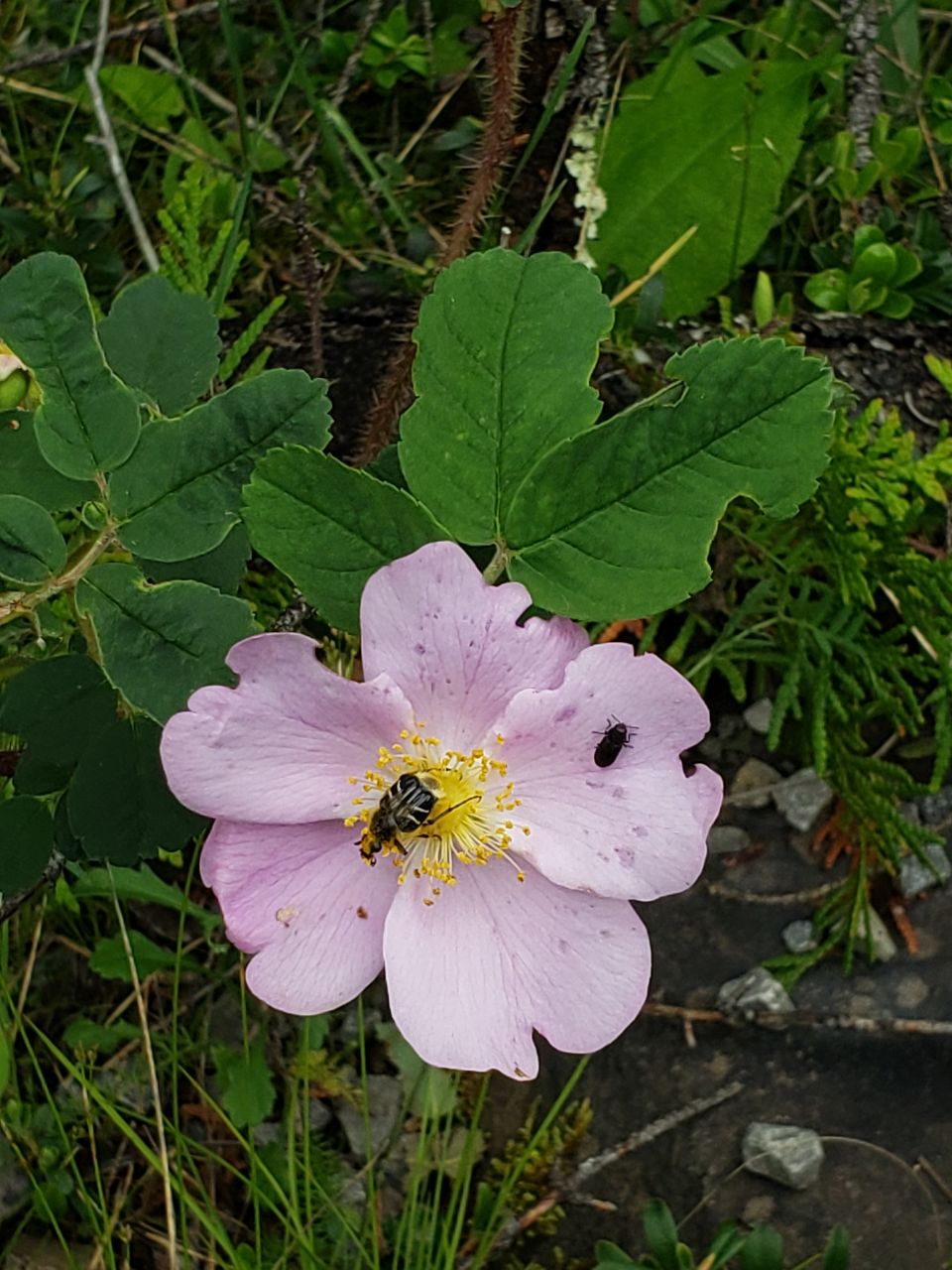
We recently put up a nest for solitary bees, which are native bees in Ontario that need some help. I’m still learning the benefits of having bees, but think it’s lovely that by both attracting and helping pollinators we will end up with a more beautiful garden. I noticed that our winterberry tree that we planted last year is currently flowering and attracting lots of little bees!

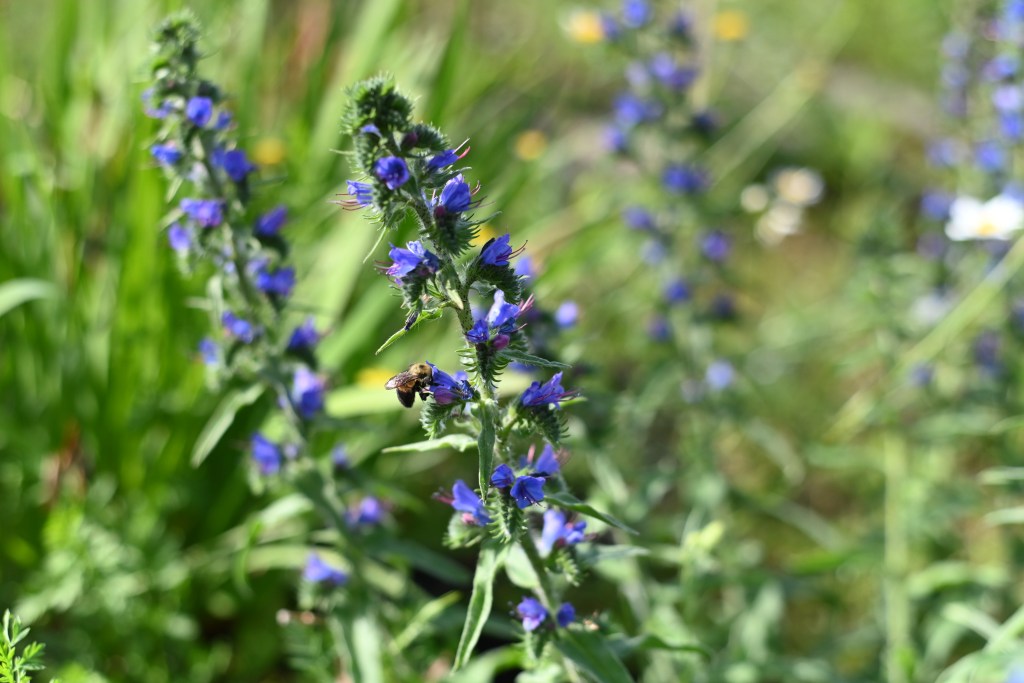
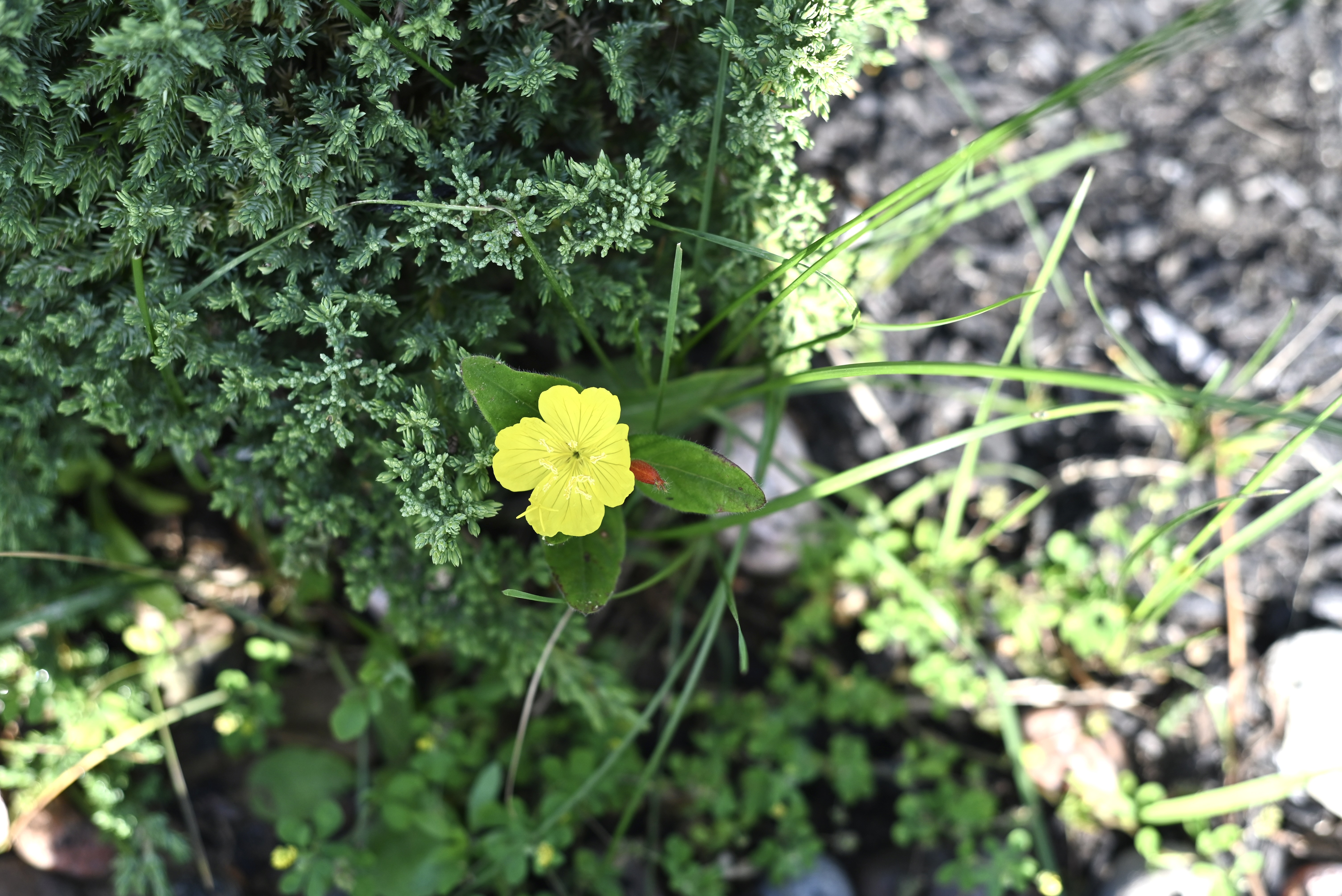
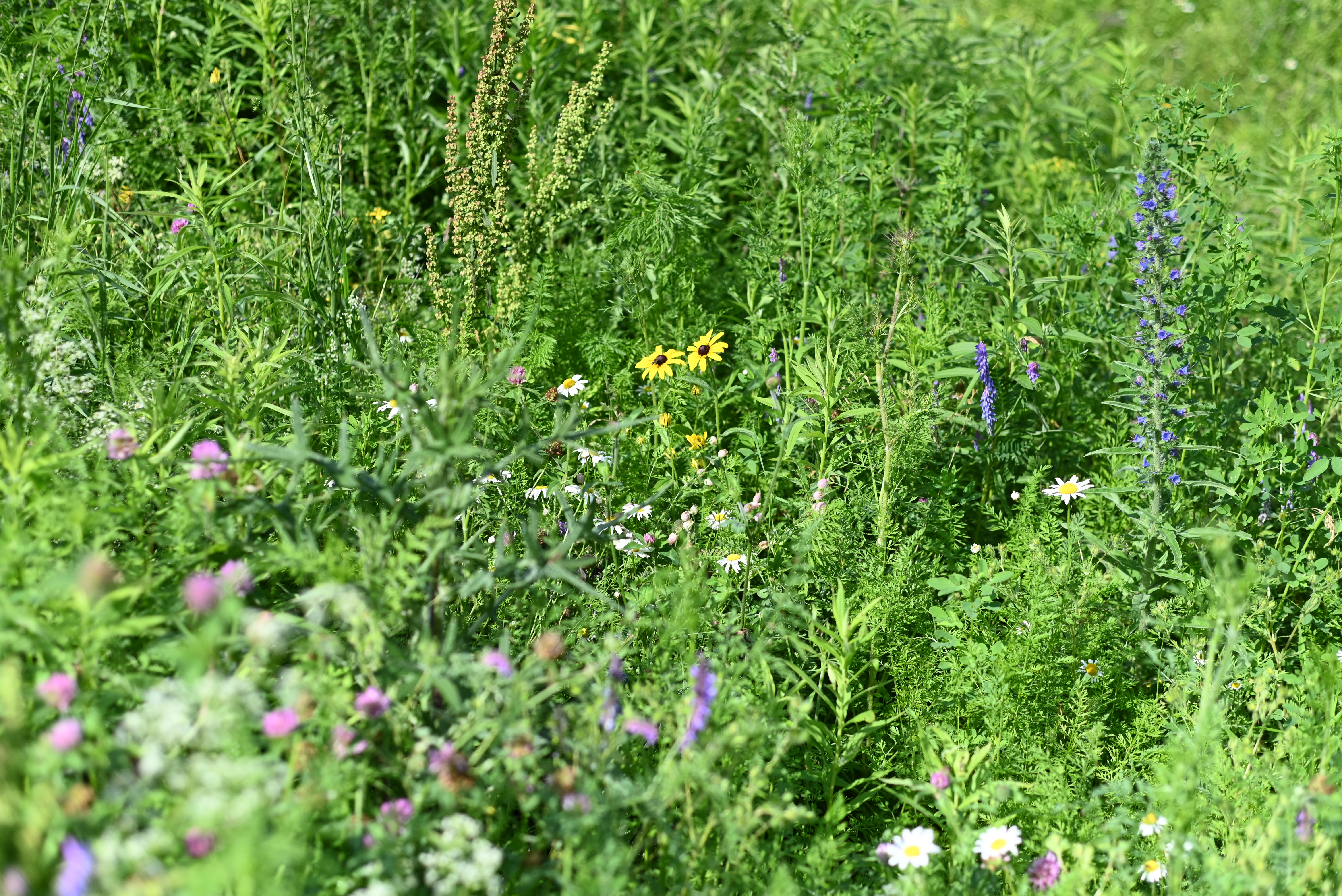
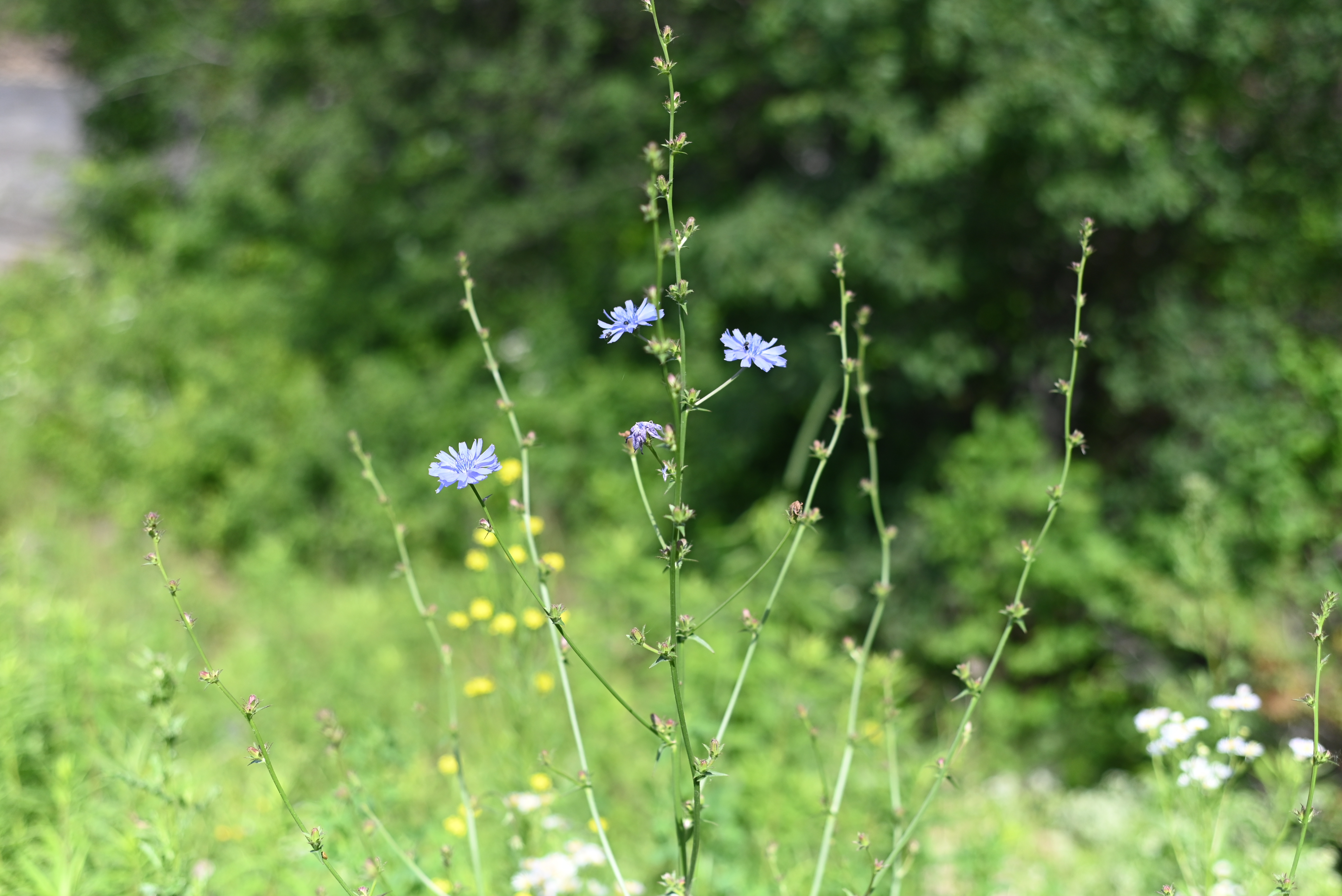
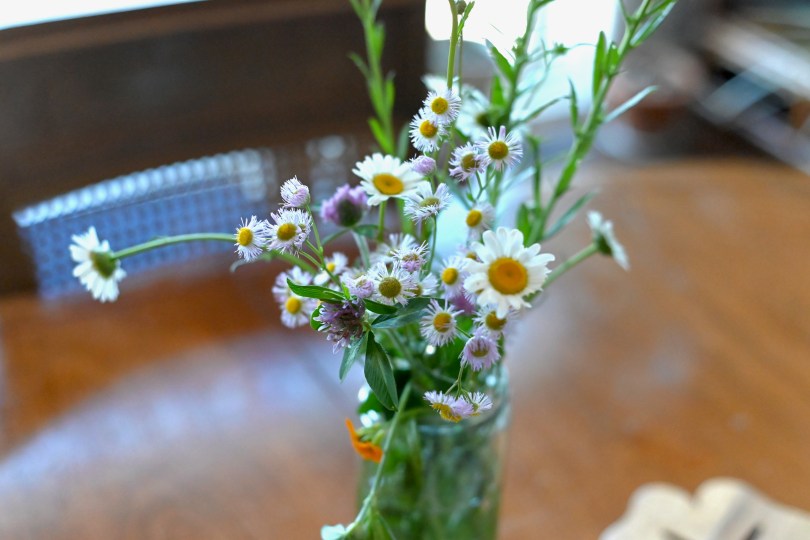
Finally – another unconventional thing I’ve been doing is waiting more before pulling things out of our garden to see what they might be. We live beside a field of wildflowers so it’s interesting to see that some of the flowers have seeded into our garden. From this practice I have been pleasantly surprised to find wild daisies and primrose appearing! I also found some viper’s bugloss or blue weed in our garden – which is currently blooming all around us. It’s apparently a plant that originally came from Europe but has become naturalized in every province in Canada. I found it interesting that viper’s bugloss appears on both ‘Ontario Wildflowers‘ and ‘Ontario Weeds‘ websites – telling on the importance of different perspectives. While it isn’t from Ontario originally it does seem to attract bees, butterflies and hummingbirds.
I’m happy that the village we live in already has a lot of gardens that appear more wild or natural than what you might see in some other areas. It’s honestly a bit intimidating to do something visibly against the grain, but I have been humbled by the amount of people who have stopped by to compliment our garden so far. I hope we’re able to make it more and more beautiful over the coming years.
Until next time!



 Cosmos and Chickadees